


We Have to Learn Together: Boyd Nyundu and the First Youth-Friendly Space
Updated: May 6
When Boyd Nyundu introduces himself, he usually begins in Simonga, not in Lusaka. He speaks about gathering youth under a tree to discuss important topics related to health, education, and family that were largely taboo in society. He shares his pride in being the first president of the first Youth Corner, a youth-friendly space created with funds from Tonga Teen Corners that opened in 2023 and, as he puts it, “has helped a lot of people.”
Only then does he turn to where he is now: in his first semester of a four-year business administration degree at Eden University, a private university in Lusaka officially recognized and accredited by national authorities, including the Ministry of Education and the Higher Education Authority. He describes the institution with quiet pride as “one of the best” in the country.

Boyd will tell you that business was his second passion, after electrical engineering. Engineering schools in Zambia are very expensive, and he began to see that his country’s development also depends on people who understand how to run organizations, create jobs and manage resources. Business, he says, gives more opportunities across Zambia, where communities “need more business-savvy people” for development and management.
With support for his studies, he now spends long hours on mathematics and other core subjects, conscious that this is a chance he would not have had without help. He wants to make his parents proud, offer more opportunities to his younger siblings, and show them that there are paths beyond the pitfalls many young people fall into in his community.
The path between Simonga and Lusaka did not begin with a scholarship form. Long before the Youth Corner, Boyd and a small group of other adolescents were already meeting under a tree. They talked about drug use, early pregnancy and the fact that many of their peers were not going to school. They walked to distant villages to speak with other young people, sharing the little information they had and encouraging them to protect themselves.
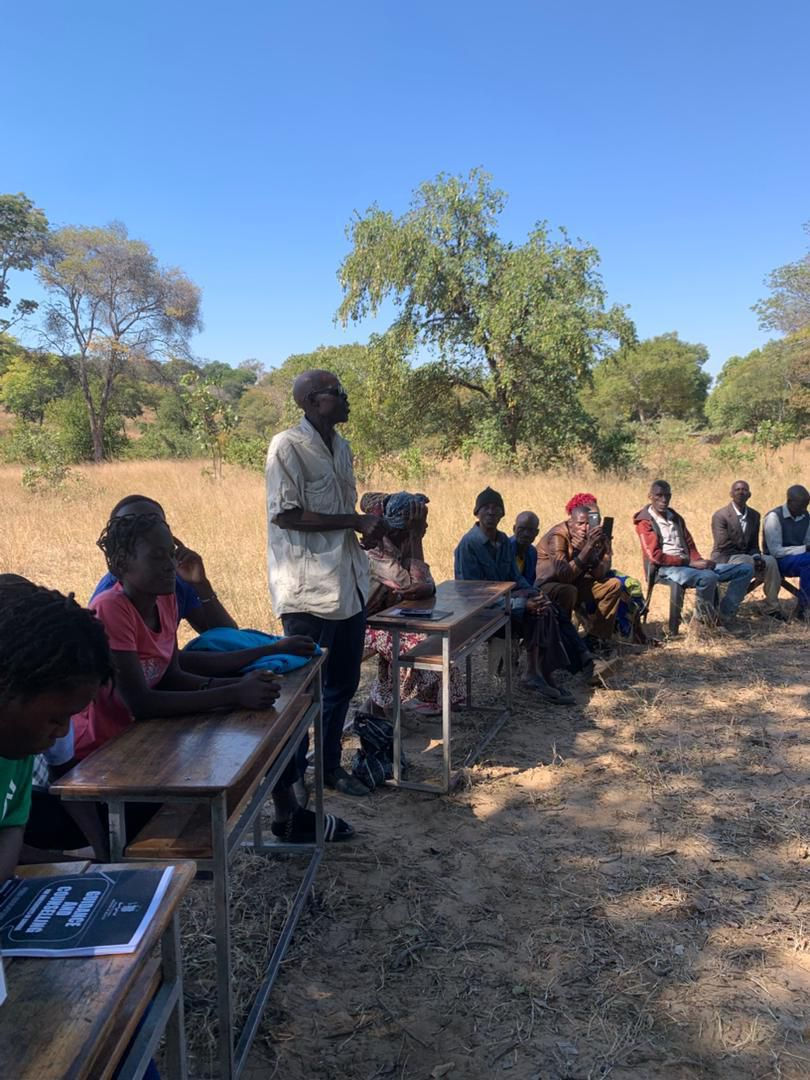
The group was small, and the setting, open to everyone’s view, did not invite vulnerable questions. Still, they persisted. Boyd remembers that by 2021, they could already see a difference. “The number of young girls pregnant and drug-infected people was going down,” he says. “So the effort was taking root.”

What was missing was a place. The official medical facilities felt intimidating and unsafe to many adolescents, especially those who were already sexually active. A fourteen-year-old, Boyd explains, could hardly imagine walking into the general clinic to speak to a fifty-year-old medical professional about contraception.

Religion and culture told them they should abstain, so they worried about being judged or exposed to parents and elders. There was no discrete place to obtain contraceptives, no room that belonged to them, and the fear of being seen kept many from seeking help. Some young people turned to unsafe methods to end unplanned pregnancies, putting their lives at risk.
The arrival of a dedicated youth center in Simonga changed that landscape. “Dominique and the others really helped, and we are so appreciative of that,” Boyd says.
The youth-friendly room beside the clinic became an entry point. There were sports and games, a place to watch television and simply be together, and there were trained peers and nurses ready to talk. Models of male and female genitalia allowed the young leaders to demonstrate the use of contraceptives.
“We now have a real space, with lots of young people accessing the services that help inform them, give them contraceptives, and that help them share information with each other.”
Videos on sexually transmitted diseases and sessions on gender based violence encouraged boys and young men to speak about subjects they might otherwise avoid. For issues the youth center could not handle directly, the team referred young people to the main clinic, now with enough trust in place that they felt able to go.

As president of the teen center, Boyd helped guide this evolution. He and the others did not stay inside. They went out to the market and into the community, organizing dances, musical performances and sketches that turned serious messages into accessible stories. One performance addressed drug abuse and its consequences; another highlighted the dangers and pressures around early marriage. These events raised awareness and also made the group visible.

They were no longer just “a group from the clinic” but a recognizable presence in village life. Out of that desire for a stronger identity came the name and motto tuyeyele antomwe. The phrase, Boyd explains, means that “we have to learn together.” Young people learn from the group, and the group learns from them. It expresses the connection between the youth center and the wider community and has become the banner under which many of their activities now operate.
Asked how the Simonga youth-friendly space has changed the way young people see their future, Boyd does not hesitate. “Young people now can think towards the future because it is now open and people don’t listen to the misinformation anymore, but are informed.” In the past, he says, it was sometimes parents themselves who pushed their children into marriage and out of school. The ambassadors began to speak with parents as well as adolescents, explaining the importance of education for future opportunities and suggesting that it does not have to be a choice between family life and schooling.
“Young people now feel more like they have options,” he says.
Even from Lusaka, Boyd has not stepped away. During university breaks, he returns to Simonga and sits with the group to see how things are going. He stays in close contact with the acting president and offers support where he can.
When he speaks about the future, his first goal is clear: to complete his degree. After that, he dreams of returning to his community in some form, sending part of his salary home to his parents and younger siblings, and perhaps one day visiting France to meet the people who believed in him from so far away.
For Tonga Teen Corners, Boyd’s story is both deeply personal and quietly emblematic. He is the first president of the first youth-friendly space, and the first student to receive financial support for his education under a new strand of our mission. His journey from meetings under a tree to a classroom in Lusaka, and back again to the teen center during each holiday, gives a human face to what this project hopes to do: accompany young people as they protect their health, stay in school and begin to build lives that are larger than the limits they grew up with, while remaining rooted in the communities that shaped them.


