


Trip 3: Returning to Simonga and Visiting Chidi in 2024
- Mar 25, 2024
- 6 min read
Updated: May 8
From Celeste Schenck, Dominique Delor and Anne Thomasset
After about a week in Zambia, our days quickly filled with meetings, site visits, and long conversations, all threaded through a reality that shapes everything right now: a severe drought that has drained the Zambezi and caused frequent, dramatic load shedding. Electricity, and therefore connectivity, can drop for hours at a time, and the schedule shifts daily without warning. It affects how clinics function, how people travel, how and even if food arrives, and how quickly plans can move from intention to action.
With On Call Africa: Progress, Localization, and What Comes Next
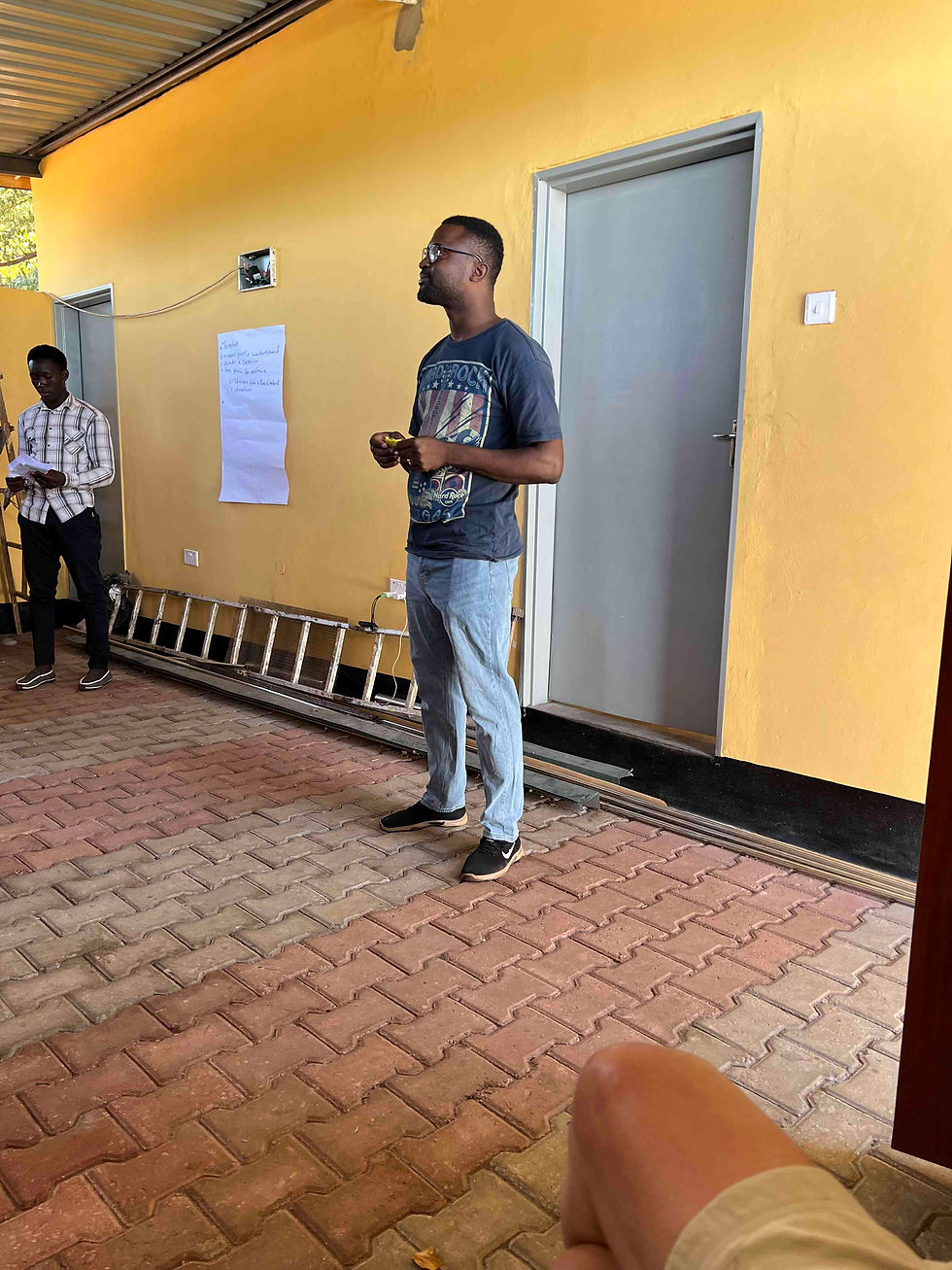
Early on, we met with the teams at On Call Africa to review the progress at Simonga and to prepare for the work at Chidi, the next youth-friendly corner in rural Zimba. At headquarters here in Livingstone, On Call Africa is also continuing its deliberate strategy of “localization,” which means steadily building Zambian leadership through shadowing and transition. This has meant that many of the people we originally worked with at On Call are leaving to pursue careers elsewhere, once they have trained and transitioned a Zambian peer to take over their work. We have adored working with Kaso, who leads youth development, and Daniel, the civil engineer and architect who oversees all building projects. Daniel will be taking us to Zimba to see the location of the next site.
We also learned that Simonga has recently been upgraded from a post to center and allocated an additional nurse, as a direct result of the substantial renovations that have been carried out. Simonga is now “brightly painted” in the ochre color typical of rural health centers. What a world of difference from the ramshackle cinder block structures we encountered when this journey began.
Back With the Students: The Work Requires Drums and Costumes
Late one Sunday afternoon, we returned to Simonga with Easter candies and spent time catching up with the youth we had worked with over the past two years. We learned quickly that two of their large drums and some traditional costumes used for outreach to remote villages were in disrepair. The group relies on performance, music, and community gathering as an entry point to the rural villages. As we wrote at the time, “As soon as the drums begin, villagers come running.
Without drums, you can’t pull your audience in.”
So the next morning, we set out with Boyd and Gilbert to find replacements and repairs. The morning became what these mornings often become: patient driving across Livingstone and neighboring villages in taxis, moving from market to market, negotiating quality and cost, and insisting on local prices because the materials would remain in Zambia to be used for outreach.


Kelvin, Boyd, and Gilbert–“the three musketeers–have been friends since childhood and serve as the core musicians of the group. Kelvin is now studying the hotel industry in Livingstone, and Boyd and Gilbert have taken over leadership of the Simonga team. Supporting their outreach tools meant supporting the heartbeat of the program itself.

The Long Road to Chidi: A Clinic Held Together by One Nurse
The next major journey took us to Chidi, a remote set of villages in the Zimba district of Southern Province. We had not understood what “remote” meant until we experienced it. The round trip took ten hours, with only about two hours on anything resembling a real road.
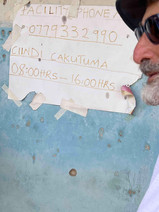
In Chidi we met Givens Mweemba, the only nurse for 11,000 people, supported by a very young trainee. The run-down clinic was unlike anything we had ever seen before in Zambia. Its hours were posted as 8-4 daily, but we also learned he delivers 20–24 babies a month in a two-bed maternity ward, leaving little time for rest. There is no running water and no electricity at Chidi, yet the clinic is orderly and organized. Protocols are posted on all the walls and followed carefully. Records are paper-based, and despite the broken shelves every patient has a notebook. People wait good-naturedly for care, sometimes helping young mothers with their children as they wait.







We left Chidi feeling humbled by Mweemba’s devotion and proud to be, with your support, a small part of the effort to renovate this clinic by adding not only a youth-friendly space, but a complete maternity center with labor and delivery rooms, aftercare, and pre- and ante-natal clinics. On Call Africa has already put in a well that will provide running water to the clinic and to a neighboring school. It will also be solar-powered, maintained by the community. Chidi will boast the first running water at a health care facility in the immediate region; electricity will follow.
What the Drought Looks Like From the Road
As we traveled through agricultural areas toward Chidi, we saw acres of maize planted to yield mealie-meal, the Zambian staple crop, a sort of white polenta eaten at every meal. Locals eat a sweetened gruel-like version of it every morning for breakfast, and a harder, more compact version of it with vegetables at lunch and dinner. Meat is rarer than can be imagined. “Every single acre of corn we saw from the car was dead,” we wrote at the time. In Livingstone, people stand in long lines on Mondays to buy 25-kilo bags of mealie-meal when the trucks arrive. This context matters because it touches everything TTC and our partners are trying to do: health, education, adolescent wellbeing, and the basic stability that makes prevention possible.
Training in the Teen Corner: Leadership, Facilitation, and Peer Teaching

Two other big events were attending training sessions facilitated by Kaso, the youth-empowerment manager at On Call Africa. These trainings are taking place in the youth-friendly corner at Simonga, the space built with your support. Kaso uses movement, laughter, games, and active learning techniques to help the adolescents learn how to communicate and lead.
A second precious excursion involved going with the peer ambassadors by truck to a very rural village, one plagued by very high rates of teen pregnancy. Miriam, the nurse charged with supporting the youth-friendly space–a warm, friendly, kind, knowledgeable and unjudgmental human being–wanted to reach out to some of these young teenagers and encourage them to avail themselves of support from the clinic/youth center. The call was launched via drumming, and within moments, people ran to the center of the village to see a play about the dangers of teen pregnancy. We sat with Miriam as she interviewed afterwards many of these very young teenagers and encouraged them to come to the clinic to learn, to take good care of their babies, and to consider returning to school after they gave birth.
On Wednesday, the group focused on facilitation: what it is; how it differs from teaching, and what makes it effective. They explored self-respect, anxiety in front of the room, powerful questions, and eye contact. On Thursday, they returned and each group of four facilitated a 20-minute community lesson, covering drug addiction, teen pregnancy, pregnancy prevention, sexually transmitted diseases, and related health topics. They supported one another throughout.

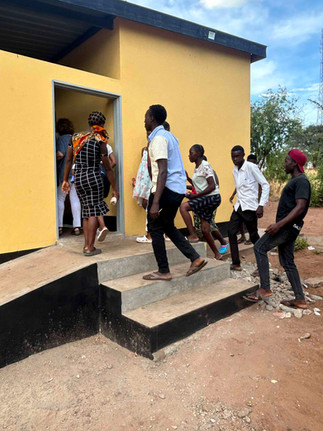


During this visit, we again enjoyed a community celebration in Simonga: the youth in their new costumes, the new drums sounding again. This time the logo and motto had been painted outside the building. Our relationships with the nurses and youth at Simonga deepens with each passing year as they learn that we are here to stay, that we return annually, and that our commitment to them grows with each passing year. Although we will not be able to have the same close friendships with young people and the nurses at Chidi, simply because of the distance, On Call understands that Simonga, close to Livingstone, our first center, will always hold a special place in our hearts.

As we prepared for the final celebration at Simonga, we were struck again by what has made this work possible: a committed local health team, a partner NGO with deep capacity, and a group of young people who keep choosing responsibility, creativity, and service to their peers.
From all of them and us to all of you, thank you for caring, for contributing, and for accompanying this important work.


